
Music has always been more than entertainment. It is a mirror of society, a pulse of culture, and a force that both reflects and shapes the human spirit. Throughout history, iconic music movements have arisen during times of change, offering both commentary and escape. These movements capture the essence of their era, and their influence continues to ripple across generations.
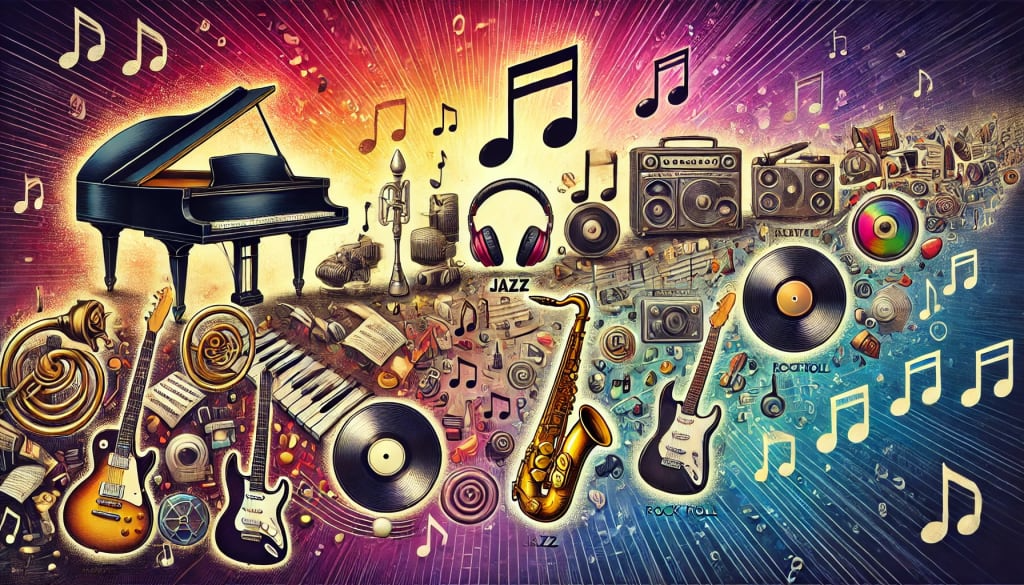
The Birth of Jazz and Cultural Liberation
In the early twentieth century, jazz erupted in New Orleans and quickly spread across the globe. More than a style, it was a statement of freedom. Its syncopated rhythms and improvisational nature reflected a society yearning for release from rigid structures. Jazz brought together African musical traditions, European harmonies, and individual expression into something entirely new.
For many, jazz was the sound of modernity. It symbolized progress, independence, and cultural pride. This was one of the first great generational sound shifts, where young people embraced music as a symbol of rebellion and identity. Jazz did not just entertain; it liberated.
Rock and the Spirit of Revolution
By the mid-twentieth century, another wave arrived: rock and roll. Fueled by electric guitars and raw energy, rock became the anthem of youth culture. It challenged authority, questioned tradition, and fueled movements for civil rights and social justice. The 1960s in particular stand out as an era where rock was inseparable from political activism.
Woodstock and other festivals became music history moments, where massive crowds gathered not only to hear music but to embody ideals of peace and unity. Rock’s intensity gave voice to a restless generation determined to reshape the world. It was more than performance; it was revolution.
Hip-Hop and the Language of the Streets
In the late twentieth century, hip-hop emerged from the Bronx, a movement born of struggle, resilience, and creativity. Through rap, breakdancing, and graffiti, communities that had long been silenced found a voice. The beats and rhymes carried stories of inequality, pride, and resistance.
Hip-hop quickly became one of the most influential era-defining art forms of its time. It not only redefined music but also influenced fashion, language, and global youth culture. What began as a local expression in marginalized communities has grown into a worldwide phenomenon, shaping how generations understand identity and authenticity.
Electronic Soundscapes and the Digital Age
As technology advanced, so did the sound of music. The rise of electronic music in the late twentieth and early twenty-first centuries introduced entirely new textures and possibilities. Synthesizers, drum machines, and computer software allowed artists to build immersive sonic landscapes.
Electronic music festivals became gathering points for global youth, transcending language barriers through pulsating rhythms and light-filled performances. This movement reflects one of the most dramatic generational sound shifts, where digital creativity expanded the boundaries of what music could be. It was not only about sound but about experience, immersion, and shared energy.
Folk Revival and the Power of Storytelling
Alongside these movements, folk music resurged as a reminder of simplicity and roots. In times of political upheaval, folk offered protest songs, storytelling, and acoustic intimacy. Bob Dylan, Joan Baez, and countless others carried messages of resistance and hope, proving that a guitar and a voice could shake the world.
This revival serves as another of those key music history moments, where art bridged personal reflection and collective action. It showed that music could be gentle yet powerful, grounded in tradition yet urgent in its call for change.
Global Fusion and Cultural Crossroads
Today, the blending of traditions is itself a defining movement. Artists weave together Latin beats, African rhythms, Asian instruments, and Western harmonies, creating music that transcends borders. This global fusion reflects the interconnected nature of modern life.
It is a continuation of the great iconic music movements, but with a distinctly international scope. By drawing from multiple traditions, it demonstrates how music can preserve heritage while simultaneously building new cultural identities.
Enduring Influence Across Generations
Each movement leaves behind more than melodies. They shape values, inspire art, and provide a cultural compass for generations to follow. These era-defining art forms become markers of time, reminding us of both struggle and triumph. They serve as archives of human emotion, memory, and aspiration.
Even today, echoes of jazz, rock, hip-hop, electronic, and folk reverberate in modern creativity. Musicians constantly draw from the past, reinterpreting it to reflect contemporary life. The cycle of influence ensures that no movement is ever truly finished; it simply evolves.
Music art movements are more than soundtracks. They are catalysts for change, expressions of identity, and bridges between people. From jazz clubs to festival grounds, from street corners to virtual stages, each shift has carried profound meaning. These iconic music movements have produced unforgettable music history moments, driven by the power of generational sound shifts and embodied in era-defining art.
They remind us that music is not only about hearing but about feeling, belonging, and transforming. Generation after generation, music continues to shape the world and, in return, is shaped by it.

